
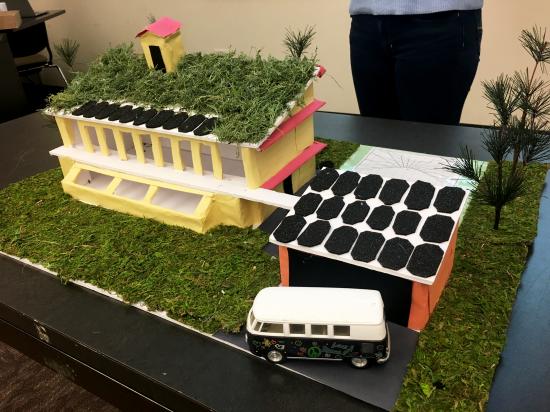
The goal of the BA in Energy Policy and Management is to give students knowledge and analytic skills in the policy and management aspects of today’s diverse energy business, along with broad exposure to the science, environmental, business and policy aspects of the energy system that drive the formation and analysis of energy-related policies.
Program Contact
Institute for Energy Studies
Requirements
Program Requirements
Energy Requirements
- ❑ ENRG 344 - Community Solutions to Climate Change Credits: 4
- or UEPP 344 - Community Solutions to Climate Change Credits: 4
- or ENRG 440 - Public and Stakeholder Engagement in Energy, Climate, and Environmental Policymaking Credits: 4
- or UEPP 440 - Public and Stakeholder Engagement in Energy, Climate, and Environmental Policymaking Credits: 4
- ❑ ENRG 350 - Energy Policy and Politics Credits: 4
- or UEPP 350 - Energy Policy and Politics Credits: 4
- ❑ ENRG 352 - Climate Change Policy Tools Credits: 4
- or UEPP 352 - Climate Change Policy Tools Credits: 4
- ❑ ENRG 380 - Energy and Environment Credits: 4
- or ESCI 380 - Energy and Environment Credits: 4
- or ENRG 320 - Science of Energy Resources Credits: 4
- ❑ ENRG 384 - Energy Economics Credits: 4
- or ECON 384 - Energy Economics Credits: 4
- ❑ ENRG 386 - The Economics of Electricity Markets Credits: 4
- or ECON 386 - The Economics of Electricity Markets Credits: 4
- ❑ ENRG 449 - Northwest Energy Systems Transitions Credits: 4
- or UEPP 449 - Northwest Energy Systems Transitions Credits: 4
- ❑ ENRG 459 - Advanced Energy Policy Credits: 4
- or UEPP 459 - Advanced Energy Policy Credits: 4
- ❑ ENRG 484 - Economics of Alternative Energy Credits: 4
- or ECON 484 - Economics of Alternative Energy Credits: 4
- ❑ ENRG 486 - Electric Utility Resource Planning Credits: 4
- or ENRG 488 - Energy Management in Organizations Credits: 4
- ❑ ENRG 490 - Energy Capstone: Energy System Synthesis Credits: 4
Fundamentals Courses
- ❑ ACCT 240 - Financial Accounting Credits: 4
- ❑ DSCI 205 - Business Statistics Credits: 4
- ❑ DSCI 305 - Applied Business Statistics Credits: 4
- or ECON 375 - Introduction to Econometrics Credits: 4
- or ENRG 322 - Energy Data Analysis Credits: 4
- ❑ ECON 206 - Introduction to Microeconomics Credits: 4
- ❑ ECON 207 - Introduction to Macroeconomics Credits: 4
- ❑ PLSC 250 - The American Political System Credits: 5
- ❑ CHEM 161 - General Chemistry I Credits: 5
- ❑ MATH 124 - Calculus and Analytic Geometry I Credits: 5
- or MATH 157 - Calculus with Applications to Business and Economics Credits: 4
And choose one of the following three options:
Option 1
- ❑ ACCT 245 - Managerial Accounting Credits: 4
- ❑ FIN 341 - Principles of Finance Credits: 4
- ❑ OPS 360 - Operations Management Credits: 4
Option 2
-
❑ Choose any three of the following:
- MGMT 271 - Law and the Business Environment Credits: 4
- MGMT 311 - Introduction to Management and Organizational Behavior Credits: 4
- MIS 320 - Principles of Management Information Systems Credits: 4
- MKTG 380 - Principles of Marketing Credits: 4
- IBUS 370 - Introduction to International Business Credits: 4
Option 3
Complete the Entrepreneurship and Innovation Minor
Electives
Choose (under advisement) a minimum of 16 credits from the following list of courses:
- DSCI 407 - Predictive Analytics for Business Credits: 4
- ECON 306 - Intermediate Microeconomics Credits: 4
- ECON 310 - Public Sector Economics Credits: 4
- ECON 343 - Population, Environment, and World Agriculture Credits: 4
- ECON 360 - Introduction to International Economics Credits: 4
- ECON 361 - Introduction to International Economics and Business Credits: 4
- ECON 380 - Urban Economics Credits: 4
- ECON 383 - Environmental Economics Credits: 4
- ECON 470 - Economic Fluctuations and Forecasting Credits: 4
- ECON 482 - Advanced Topics in Environmental Economics Credits: 4
- ECON 483 - Resource Economics Credits: 4
- ENRG 101 - Energy and Society Credits: 3
- ENRG 320 - Science of Energy Resources Credits: 4 (only if not used in the Energy Requirements courses)
- ENRG 330 - Energy from the Earth Credits: 4
- or GEOL 330 - Energy from the Earth Credits: 4
- ENRG 340 - Energy and Climate in Rural Development Credits: 4
- ENRG 344 - Community Solutions to Climate Change Credits: 4 (only if not used in the Energy Requirements courses)
- or UEPP 344 - Community Solutions to Climate Change Credits: 4 (only if not used in the Energy Requirements courses)
- ENRG 345 - Energy in the Global South Credits: 5
- or ANTH 345 - Energy in the Global South Credits: 5
- ENRG 354 - Energy in American History Credits: 5
- or HIST 354 - Energy in American History Credits: 5
- ENRG 360 - Energy Efficient and Carbon Neutral Design Credits: 4
- or ESCI 360 - Energy Efficient and Carbon Neutral Design Credits: 4
- ENRG 381 - Biofuels Credits: 3
- or CHEM 381 - Biofuels Credits: 3
- ENRG 391 - Energy Speaker Series Credits: 1
- ENRG 392 - Energy Symposium Credits: 1
- ENRG 400 - Directed Independent Study Credits: 1-15
- ENRG 420 - Advanced Energy Science Credits: 3
- ENRG 430 - Energy Materials and Waste Credits: 4
- ENRG 440 - Public and Stakeholder Engagement in Energy, Climate, and Environmental Policymaking Credits: 4 (only if not used in the Energy Requirements courses)
- or UEPP 440 - Public and Stakeholder Engagement in Energy, Climate, and Environmental Policymaking Credits: 4 (only if not used in the Energy Requirements courses)
- ENRG 461 - Mechanical and Environmental Systems in Buildings Credits: 5
- ENRG 464 - Sustainable Building Analysis and Design Credits: 4
- or ESCI 464 - Sustainable Building Analysis and Design Credits: 4
- ENRG 466 - Life Cycle Analysis Credits: 4
- or ESCI 466 - Life Cycle Analysis Credits: 4
- ENRG 475 - Renewable Electric Power Systems Credits: 4
- or ESCI 475 - Renewable Electric Power Systems Credits: 4
- ENRG 480 - Applications in Energy Production Credits: 4
- or ESCI 480 - Applications in Energy Production Credits: 4
- ENRG 482 - Greenhouse Gas Mitigation Credits: 4
- or ESCI 482 - Greenhouse Gas Mitigation Credits: 4
- ENRG 486 - Electric Utility Resource Planning Credits: 4 (only if not used in the Energy Requirements courses)
- ENRG 488 - Energy Management in Organizations Credits: 4 (only if not used in the Energy Requirements courses)
- ENRG 495 - Internship Credits: 1-4
- ENRG 498 - Directed Research Credits: 1-12
- ENVS 320 - GIS I: Introduction to Geographic Information Science Credits: 4
- ENVS 355 - Environmental Law and Policy Credits: 4
- or UEPP 355 - Environmental Law and Policy Credits: 4
- ENVS 392 - Introduction to Climate Change Credits: 4
- or ESCI 392 - Introduction to Climate Change Credits: 4
- or ESCI 492 - Climate Change Credits: 4
- ENVS 419 - Applications in GIS Credits: 3
- or ENVS 420 - GIS III: Analysis and Modeling Credits: 5
- ENVS 493 - Environmental Impact Assessment Credits: 5
- or ESCI 493 - Environmental Impact Assessment Credits: 5
- or ENVS 326 - Climatology Credits: 4
- ENVS 359 - Business and Sustainability Principles and Practice Credits: 4
- or MGMT 359 - Business and Sustainability Principles and Practice Credits: 4
- ENVS 471 - Campus Sustainability Planning Studio Credits: 3
- or UEPP 471 - Campus Sustainability Planning Studio Credits: 3
- PLSC 420 - Environmental Politics Credits: 5
- or ENVS 458 - Environmental Politics Credits: 5
- LDST 408 - Sustainability Leadership Credits: 4
- or SUST 408 - Sustainability Leadership Credits: 4
-
The following courses may be used as electives only if they are not used to satisfy Option 1 or Option 2 under Fundamentals Courses:
- ACCT 245 - Managerial Accounting Credits: 4
- FIN 341 - Principles of Finance Credits: 4
- IBUS 370 - Introduction to International Business Credits: 4
- MGMT 311 - Introduction to Management and Organizational Behavior Credits: 4
- MIS 320 - Principles of Management Information Systems Credits: 4
- MKTG 380 - Principles of Marketing Credits: 4
- OPS 360 - Operations Management Credits: 4
- PLSC 427 - Politics of the Policy Process Credits: 5
-
Notes:
- A maximum of 8 credits from ENRG 400, ENRG 495, and ENRG 498 can count towards fulfilling the major electives.
- A maximum of 3 credits from ENRG 391 and ENRG 392 can count towards fulfilling the major electives.